Scientists used a levitating magnet to hunt for dark matter
In a first-of-its-kind test, scientists used a levitated magnet to search for dark matter, the unidentified substance believed to be present throughout the cosmos. If dark matter is made up of ultralight particles, it could behave…


Editor's note: This article summarises published research for a general audience and is not medical, legal or professional advice — read the primary sources before acting on it.
In a first-of-its-kind test, scientists used a levitated magnet to search for dark matter, the unidentified substance believed to be present throughout the cosmos. If dark matter is made up of ultralight particles, it could behave like a wave that would subtly jostle the magnet.
Although no signs of such jostling appeared, a few tweaks could improve the experiment’s sensitivity to dark matter’s potential influence, the researchers report in a paper to be published in Physical Review Letters.
Scientists believe dark matter must exist to account for astronomical observations that suggest an unidentified source of mass in the cosmos. Dark matter has evaded a wide variety of detection attempts, so astroparticle physicist Christopher Tunnell of Rice University in Houston was looking for new ways to search for it.
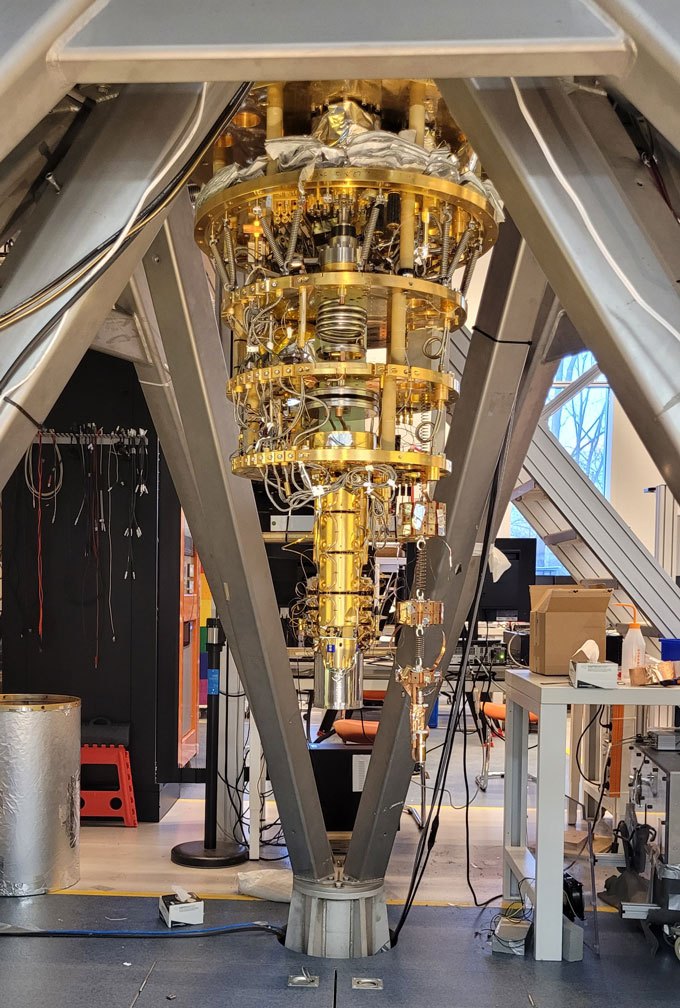
Tunnell and colleagues realized that an existing experiment, originally designed to make sensitive gravitational measurements, could spot ultralight dark matter. In the experiment, a magnet with a mass of less than a milligram was suspended within a container made of a superconductor — a material that conducts electricity without resistance. The magnet’s motion was monitored with a quantum device designed to measures changes in magnetic fields, known as a SQUID. If ultralight dark matter exists and interacts with normal matter via a new type of force, the dark matter wave would have subtly jiggled the magnet. Tunnell and colleagues reanalyzed the data from that experiment to search for dark matter’s influence, but found no evidence of it.
The experiment was not the most sensitive search for ultralight dark matter. But it was optimized for gravitational measurements, not dark matter detection. So, some simple changes, such as increasing the mass of the magnet, could allow it to outperform other techniques. The researchers aim to switch to a larger magnet with a mass of a few hundred milligrams.
The idea, which melds quantum technologies with particle physics detection, came out of a climate protest, where Tunnell met physicist Tjerk Oosterkamp of Leiden University in the Netherlands, a coauthor of the paper.
The improved experiment is to be called POLONAISE, after a traditional Polish dance that the two coauthors did to keep warm at the protest.

admin
Reports on research, engineering and the people behind them for this publication.